Agentic AI Coming to IBM FlashSystem Storage
The new-generation FlashSystem is ‘the most transformative thing that has happened in storage in decades,’ proclaimed Sam Werner, GM of IBM Storage
The amount of data being produced around the world is exploding, with an estimated 181 zettabytes generated in 2025 alone, a 23% increase over 2024, and a 9,000% increase over 2010.
A major driver of this surge is AI, and it is AI that will help manage it.
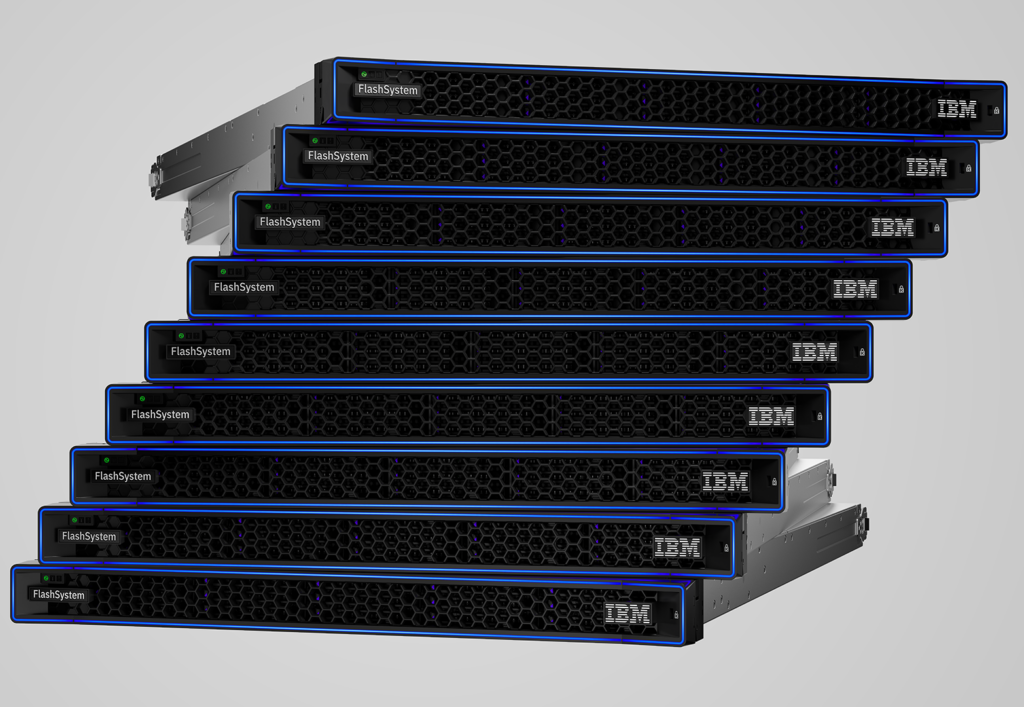
That is IBM’s contention as it introduces the new-generation FlashSystem storage solution, embedded with agentic AI to help enterprises watch over their ever-expanding data stores.
IBM focused on those new autonomous storage management capabilities as it announced the new generation of the hardware Feb. 10. Utilizing agentic AI for tasks like anomaly detection, workload provisioning and compliance documentation, the new FlashSystem hardware can reduce storage management efforts by up to 90%, according to IBM’s calculations.
Introducing FlashSystem.ai
Powering these autonomous capabilities is the newly introduced FlashSystem.ai, a set of data services that “bring our clients AI management, monitoring, and the ability to diagnose issues and remediate problems before they happen,” Sam Werner, GM of IBM Storage, said during a press briefing.
Werner stressed the hardware release is far more than an incremental refresh. “I think this is the most transformative thing that has happened in storage in decades,” he said.
IBM is presenting these new autonomous capabilities as a way of amplifying the expertise of busy storage administrators. These technologists are adept at balancing workloads across arrays, Werner said, “but imagine if we could put the most relevant information at their fingertips at all times and help them fully optimize the utilization of their systems.”
Dynamic Workload Provisioning
The new FlashSystem can help enterprises stay in compliance with service level agreements (SLAs) by helping to provision workloads across systems. When workloads spike in one system, the AI agents can move them to a system with more capacity, Werner explained.
The agents can also help determine how workloads should be organized during initial setup. “You’re no longer having to go through UI panels and create volumes, etc. You can have a conversation with the AI and say, ‘I want to create a workload with these characteristics. Please find the best place for it and provision it for me,’” Alistair Symon, VP of Storage Systems Development at IBM, said at the briefing.
For that kind of task, the AI inferencing takes place in the cloud, on the IBM Storage Insights platform, Symon noted. “We made a conscious decision that we didn’t want to have any clients required to put any GPUs in their data center to run FlashSystem.ai. It all gets handled by either the FlashSystem itself or the IBM Cloud,” he said.
Anomaly Detection and Security
FlashSystem handles AI inferencing in its own onboard processor cores for tasks such as ransomware defense, where IBM is promising sub-one-minute detection. According to IBM, this will help lighten the load for storage admins who spend considerable time analyzing data to detect anomalies and diagnose problems.
“What’s different now is that the FlashSystem is using data collection over time and looking at changes in behavior of I/O, applications, users, data. And we actually will detect those anomalies that you would’ve had to go back and figure out,” Werner said.
Aiding in rapid recovery from attacks, the Safeguarded Copy function found in FlashSystem’s FlashCore Modules can create fully protected air-gapped data copies to enable sub-one-minute recovery.
Space Saver
The advances found in the new FlashSystem aren’t all related to agentic AI. The system’s drives are denser than their predecessors. In fact, at up to 105 terabytes, they’re the densest drives for enterprise workloads in the industry, Werner said.
This, he explained, allows for an expected storage footprint reduction of 30-75% with optimized placement and consolidation. In all, the system delivers up to 40% greater data efficiency, according to IBM’s product literature.
3 Flavors of Flash
IBM is offering three models of its new FlashSystem:
FlashSystem 5600
Size: 1U
Capacity: Up to 2.5 PBe
Performance: Up to 2.6 million IOPS
Best for: Space-constrained environments such as edge locations, remote offices and smaller data centers
IBM FlashSystem 7600
Size: 2U
Capacity: Up to 7.2 PBe
Performance: Up to 4.3 million IOPS
Best for: Large virtualized environments, analytics platforms and consolidated applications requiring faster response times
IBM FlashSystem 9600
Size: 2U
Capacity: Up to 11.8 PBe
Performance: Up to 6.3 million IOPS
Best for: Core banking systems, ERP platforms and AI-driven applications requiring speed and advanced security
The new FlashSystem models will be generally available March 6.